
Accurate Measurement of Highly Corrosive Media: Tancy TEF-P High-performance Electromagnetic Flowmeter in Concentrated Sulfuric Acid Service
Accurate flow measurement in concentrated sulfuric acid service is never just an instrumentation task. In a sulfuric acid plant, the acid flow to the second absorption tower directly affects SO3 absorption efficiency, thermal balance, and emission control.
1. Project Overview
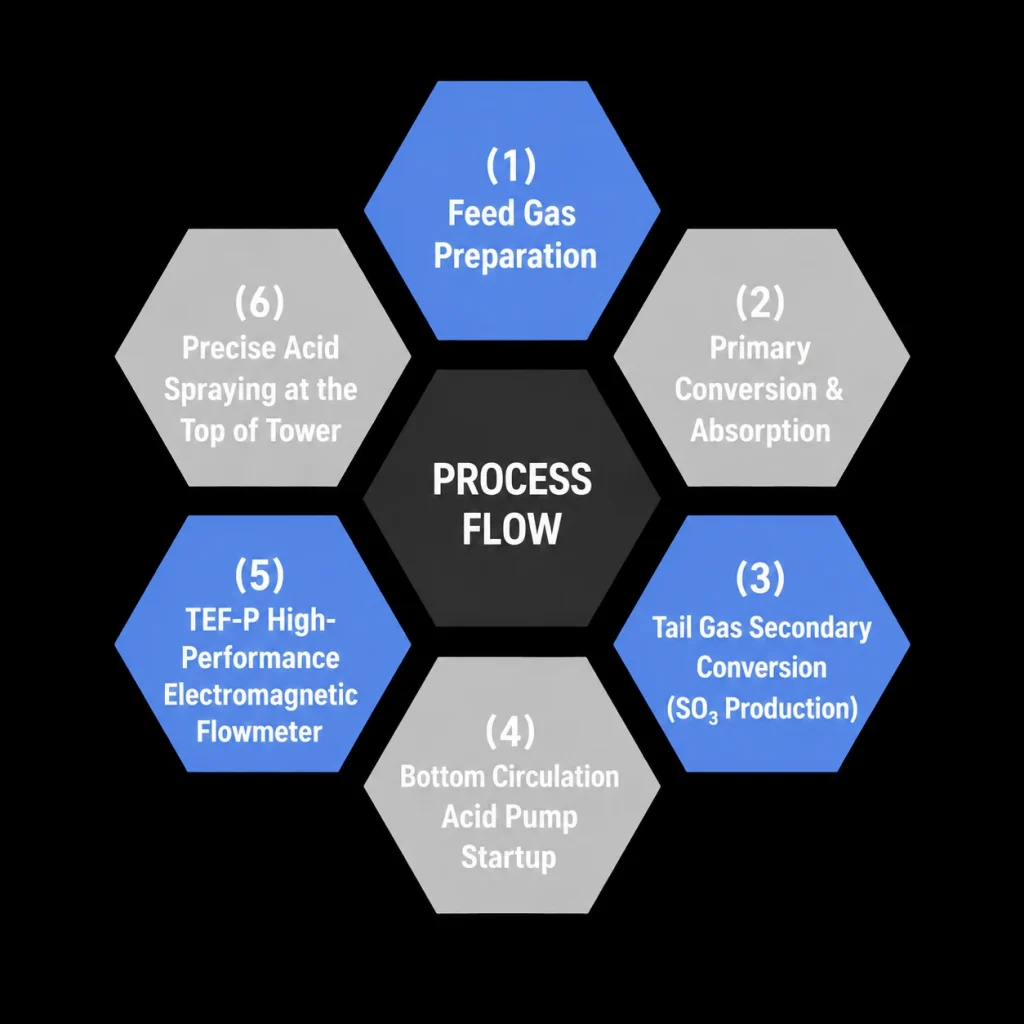
In our chemical plant project, the measurement point was located on the acid feed line to the second absorption tower. Concentrated sulfuric acid is continuously pumped from the bottom circulation pump to the top of the tower, where it absorbs sulfur trioxide from the converter.
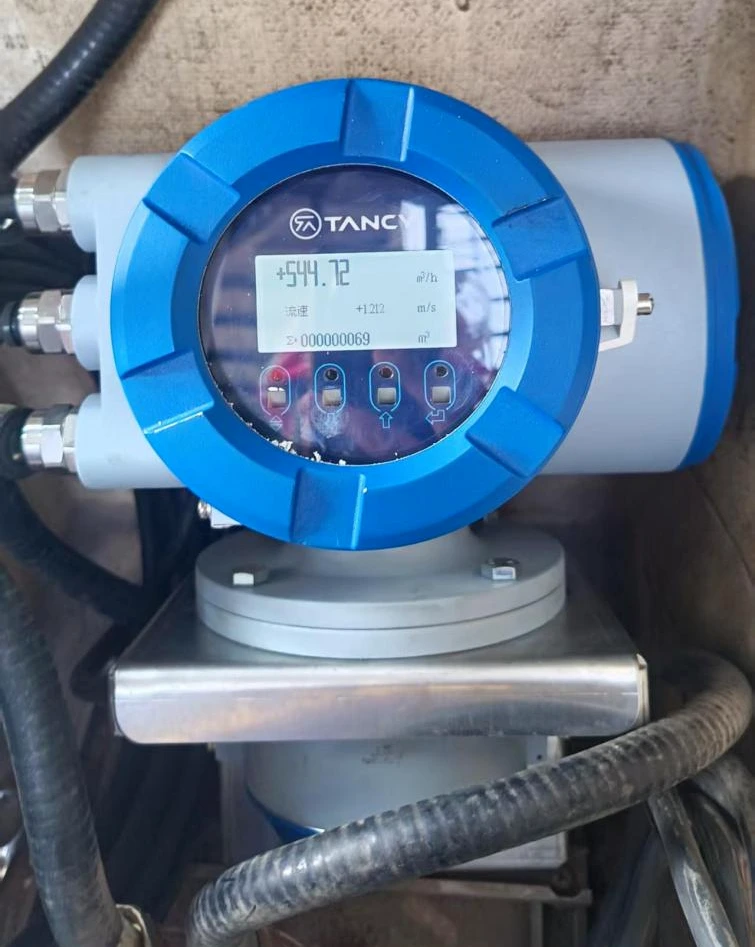
Key operating parameters: the measured medium is 98.6%–99% concentrated sulfuric acid, the pipe size is DN 400, and the operating flow rate is 545 m³/h.
2. Why precision matters
At the second absorption tower, accurate measurement of concentrated sulfuric acid flow is essential for stable acid circulation, thermal-balance control, and emission control.
Stable acid circulation
Accurate tower-feed measurement helps maintain the required liquid-to-gas ratio and keep the absorbing acid concentration within 98.6%–99%. Any deviation can significantly reduce SO3 absorption efficiency.
Thermal balance
The absorption of SO3 by concentrated sulfuric acid releases a large amount of heat. Reliable flow data helps ensure sufficient cooling-acid circulation and reduces the risk of tower overheating and equipment damage.
Emission control
If acid circulation is insufficient, unabsorbed SO3 may form acid mist emissions, creating both raw-material losses and environmental compliance risks.
3. Measurement Challenges
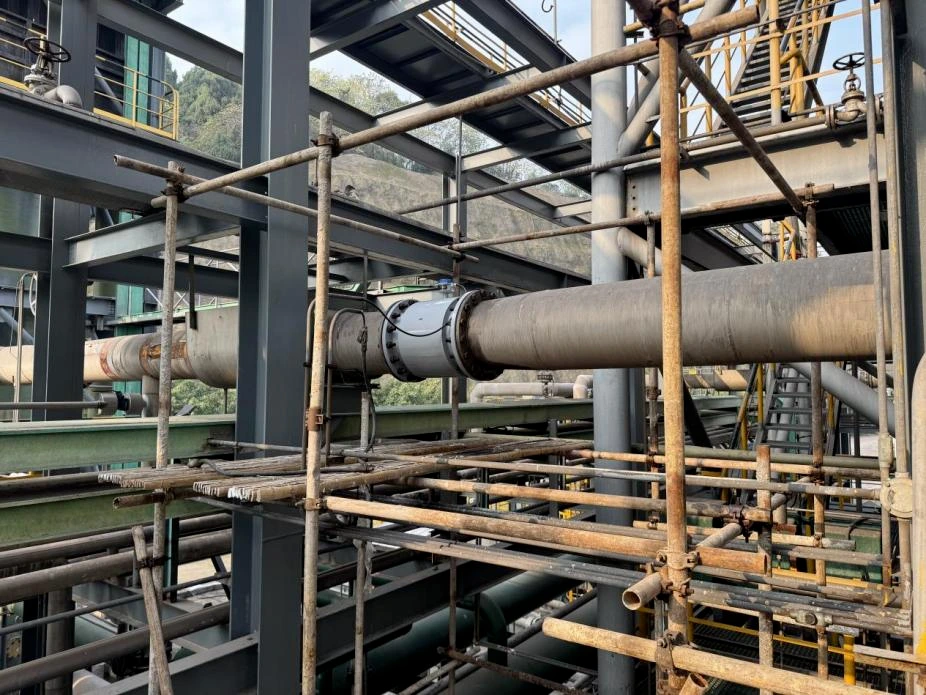
Given the demanding process requirements, this measurement point faces three key challenges in operation:
Highly corrosive and oxidizing medium
99% sulfuric acid is highly oxidizing and corrosive. Conventional metal electrodes and rubber liners can be quickly compromised during long-term exposure.
Pipeline shock and pressure fluctuation
Long-distance, large-diameter upward transport can introduce flow impact and pressure variations inside the pipeline.
Maintenance access on DN400 piping
With an compact meter on DN400 piping, routine data checks and parameter adjustments would require difficult and potentially unsafe climbing.
4. TEF-P Solution and Advantages
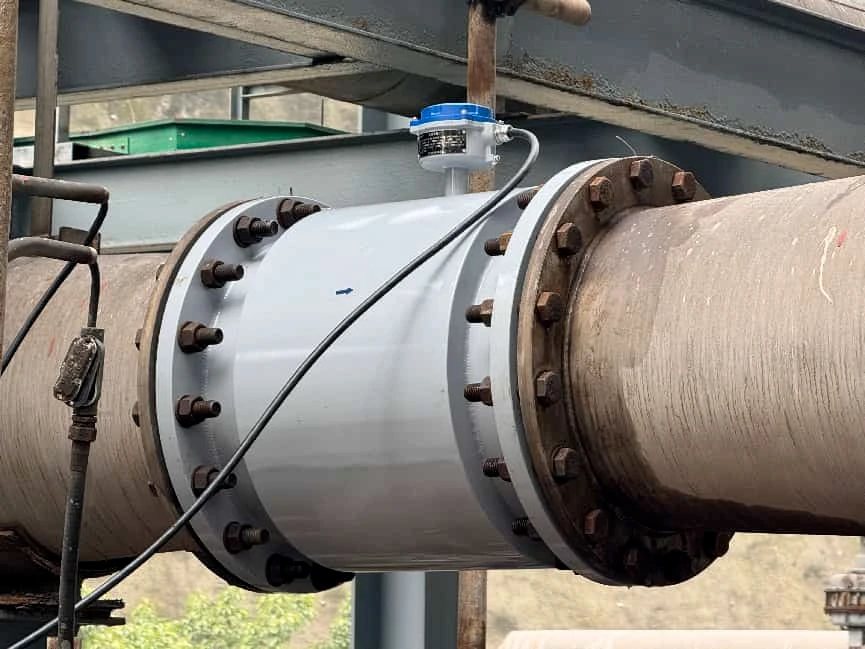
For this duty, Tancy TEF-P High-performance Electromagnetic Flowmeter was selected to match the actual operating conditions and measurement requirements.
Materials selected for aggressive acid service
The meter uses a chemically stable PTFE liner and platinum-iridium alloy measuring electrodes, supporting stable signal acquisition in aggressive concentrated sulfuric acid service and helping maintain reliable liquid-to-gas ratio control.
Accurate measurement with built-in diagnostics
With Class 0.5 accuracy across a 0.5–10 m/s flow velocity range, the meter supports precise flow measurement. The transmitter also provides built-in diagnostics, including alarms for empty-pipe conditions and abnormal upper or lower flow limits, helping the control room respond quickly and support thermal-balance control.
Remote-mounted architecture for easier operation and maintenance
The project uses a remote-mounted configuration that separates the sensor from the transmitter. The LCD transmitter is installed in a safe, visible, and easy-to-access location, making operation and maintenance more flexible, safer, and more convenient for complex long-distance piping.
5. Conclusion
In this application, the Tancy TEF-P High-performance Electromagnetic Flowmeter addresses the challenge of accurate concentrated sulfuric acid measurement through corrosion-resistant materials, a flexible remote-mounted design, and strong interference resistance. More than a flowmeter, it acts as a critical measurement node for efficient absorption tower operation, thermal-balance control, and environmental compliance.
For more information, contact us: marketing@jinka.cn
Terminology and Source Notes
The following terms were selected based on official product materials, common industry usage, and overseas B2B communication context.
-
No. 161, Yuancheng Road, Qiantang District, Hangzhou, Zhejiang Province
Gas Solutions
Water Solutions
Process Measurement
Resources
About Goldcard
Copyright © 2025 Goldcard Smart Group Co., Ltd. All Rights Reserved